From a box of military records to a ranked claim plan.
Veterans preparing a VA disability claim face a stack of records and a rating schedule written for lawyers. Most of the work is reading: finding the diagnosis, the in-service event and the medical link for each condition, then working out what is still missing. After Duty does that reading, so a veteran understands their own information, whether they prepare the claim alone, with a veterans service officer or with an accredited attorney.
After Duty is an educational resource. It isn't legal advice, doesn't file claims or connect to VA, and doesn't replace a VSO or accredited attorney. It's an independent app, not affiliated with or endorsed by the U.S. Department of Veterans Affairs.
Designed and built by Craftloop
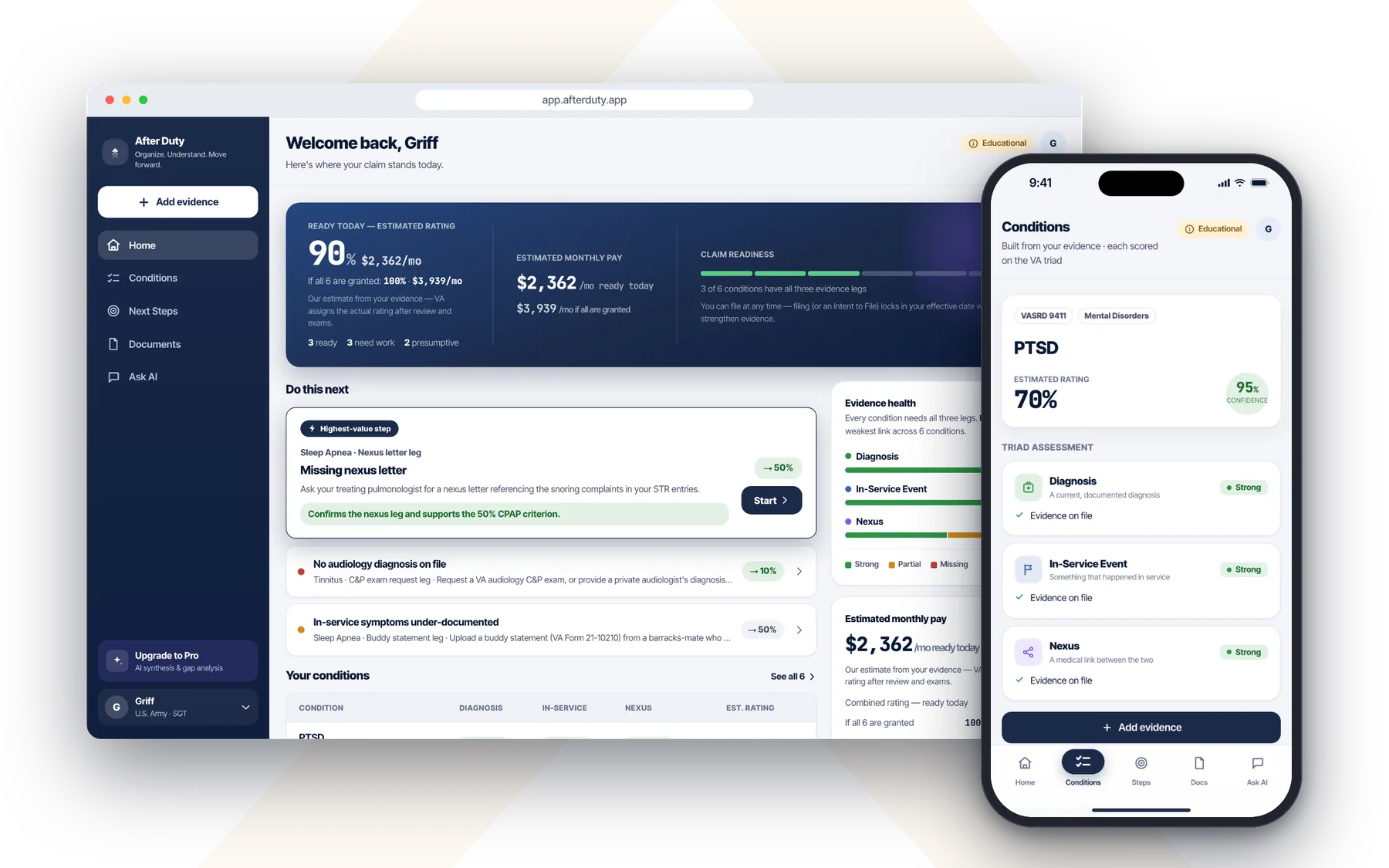
The problem
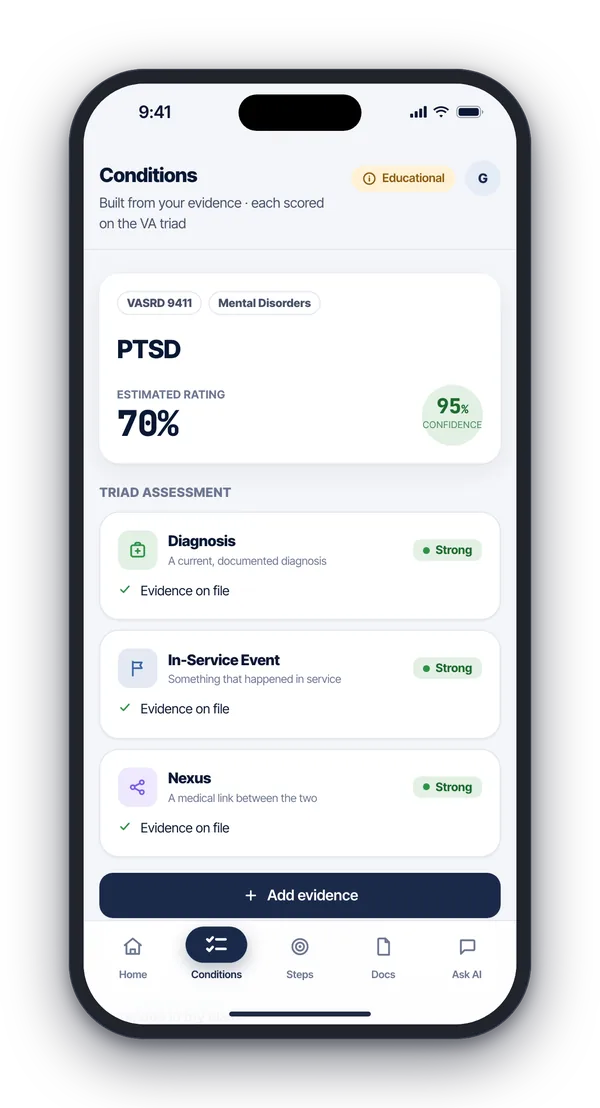
A strong VA claim needs three things for every condition: a current diagnosis, an event in service, and a medical link between them. The proof is buried across hundreds of pages of records.
When a claim goes in missing information, the VA has to ask for more records or exams, and every extra round of review adds time before benefits arrive. Knowing what the claim needs before it's filed helps shorten that wait.
What we built
- One codebase, three platforms
- A Next.js app ships as the website and, through Capacitor, as the iOS and Android apps.
- AI where it reads, code where it decides
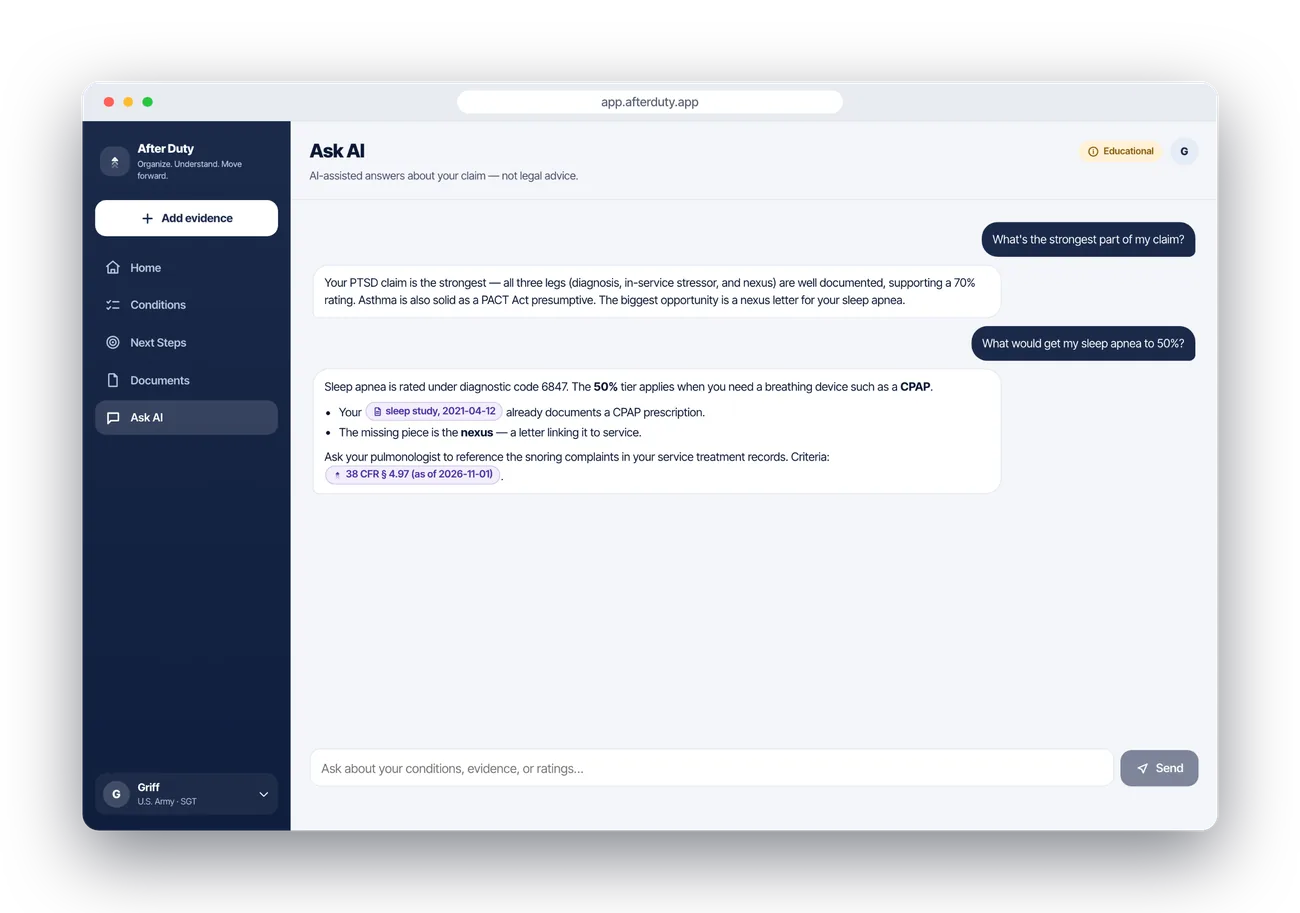
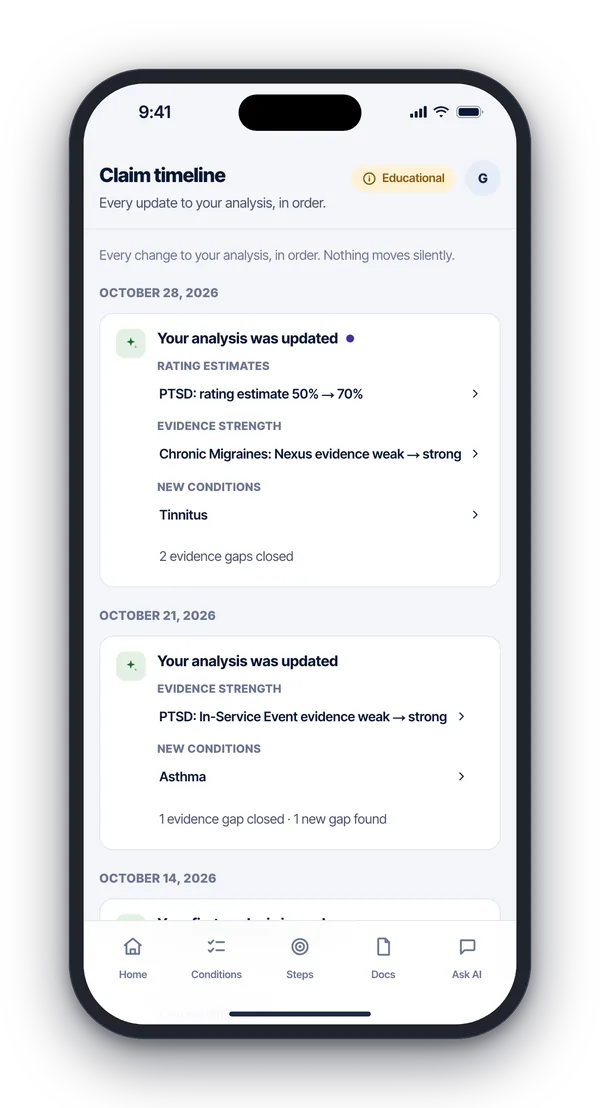
- Gemini extracts facts from each document. Claude finds conditions, estimates ratings and powers a chat that cites its sources. Presumptive rules, rating limits, VA's combined-rating math and the change log are plain, tested code, so the numbers a veteran sees are reproducible.
- Value-ranked next steps
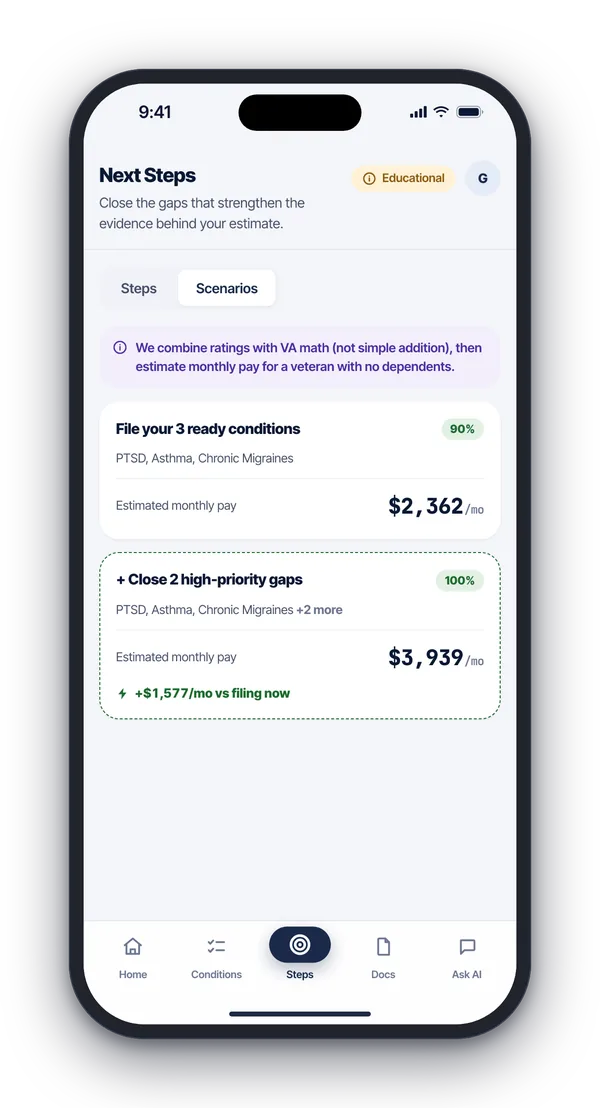
- Each evidence gap is tested the way a VA rater would test it, then ranked by how far it can move the estimate.
- Incremental by design
- Content fingerprints mean only new or changed documents are re-read, which keeps re-analysis fast and cheap.
- A knowledge base that corrects itself
- When expert review disproves something the AI said, the correction is enforced in code on every later analysis.
- Honest by default
- Every estimate carries its confidence, says when a key test is missing, and reminds the veteran that only VA decides.
How a record becomes a plan
When a veteran adds a document, the analysis runs in this order. AI does the reading; plain, tested code does the deciding.
The screens
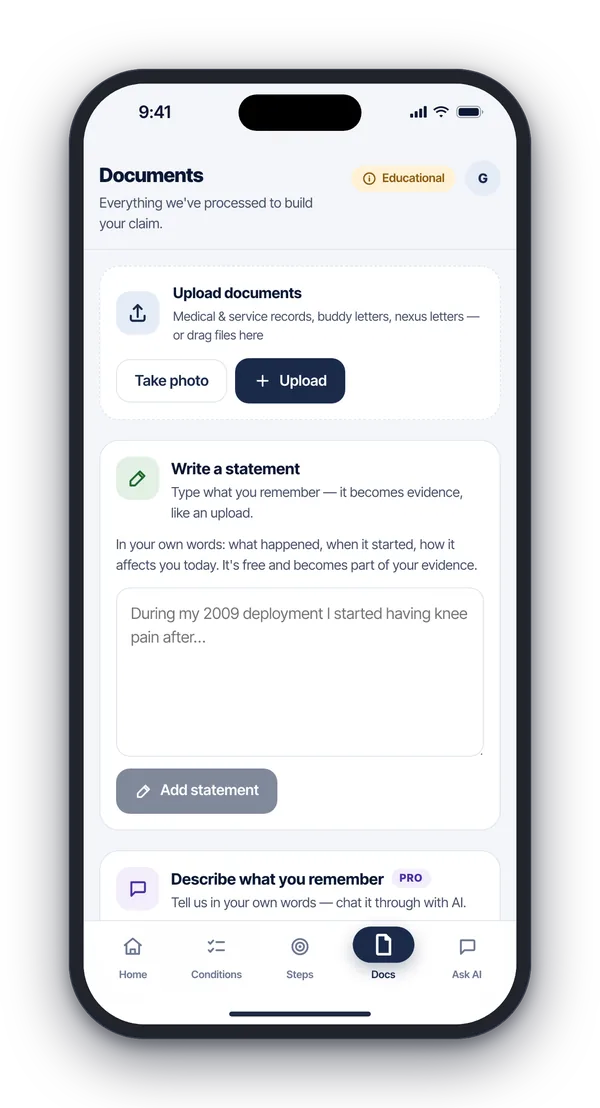
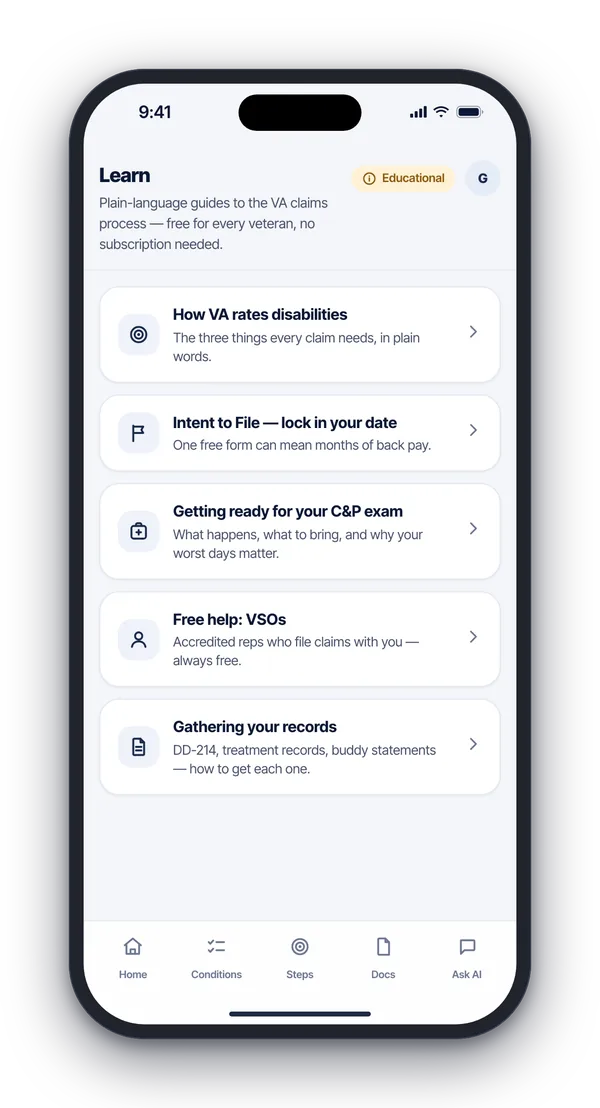
Scroll sideways. Every screen shows a synthetic veteran, D. Griff.
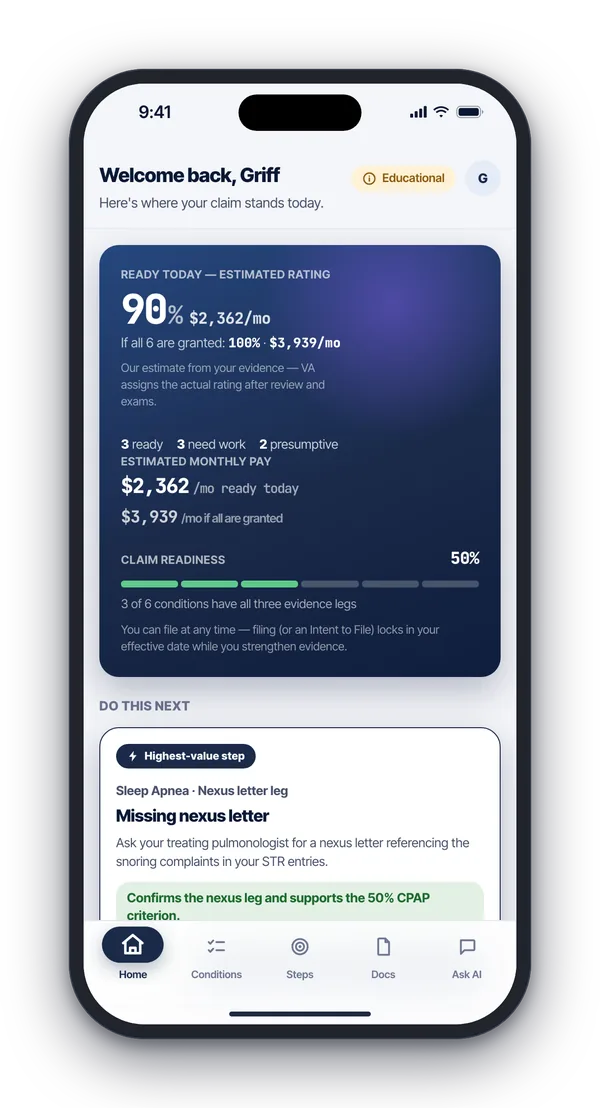
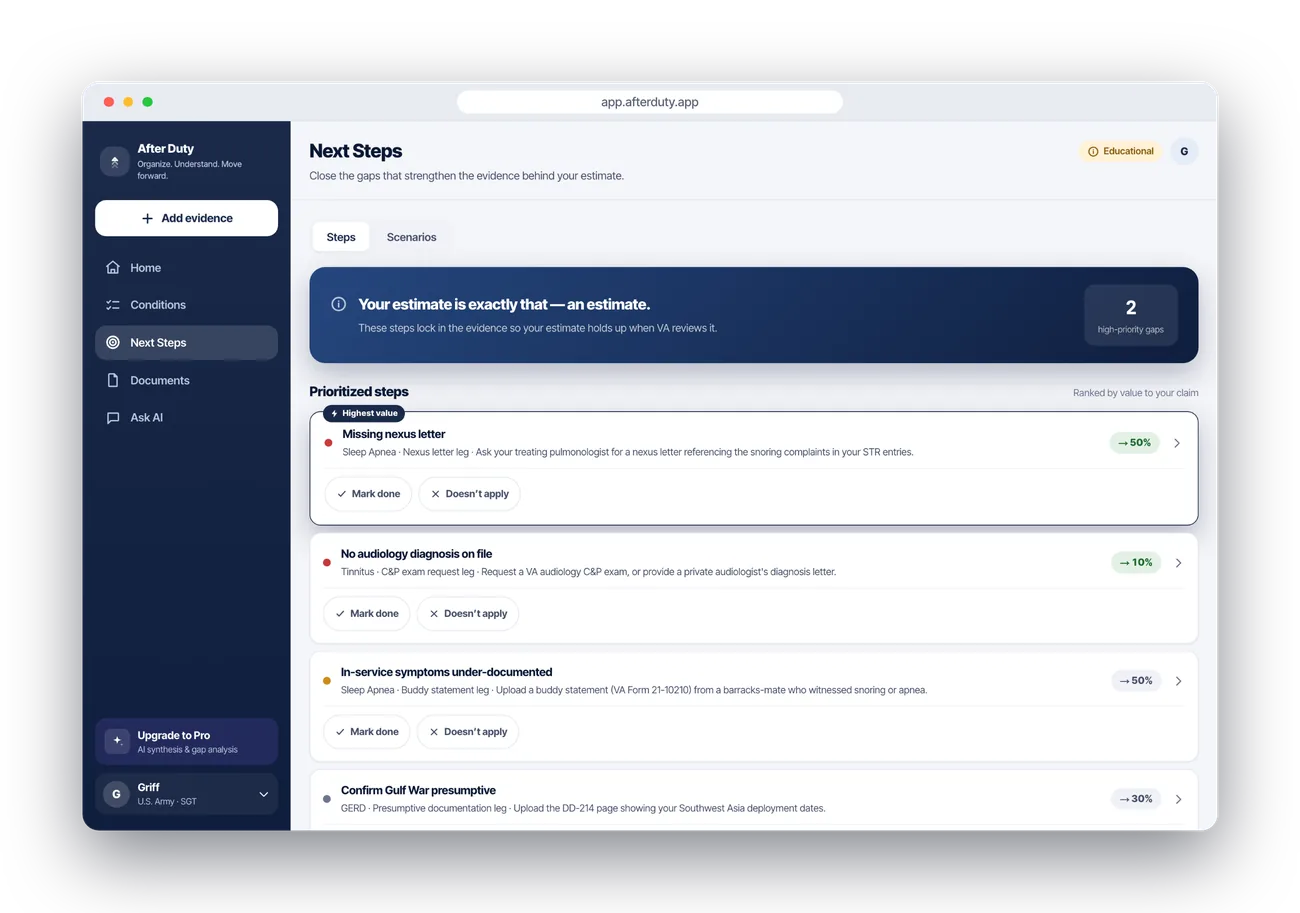
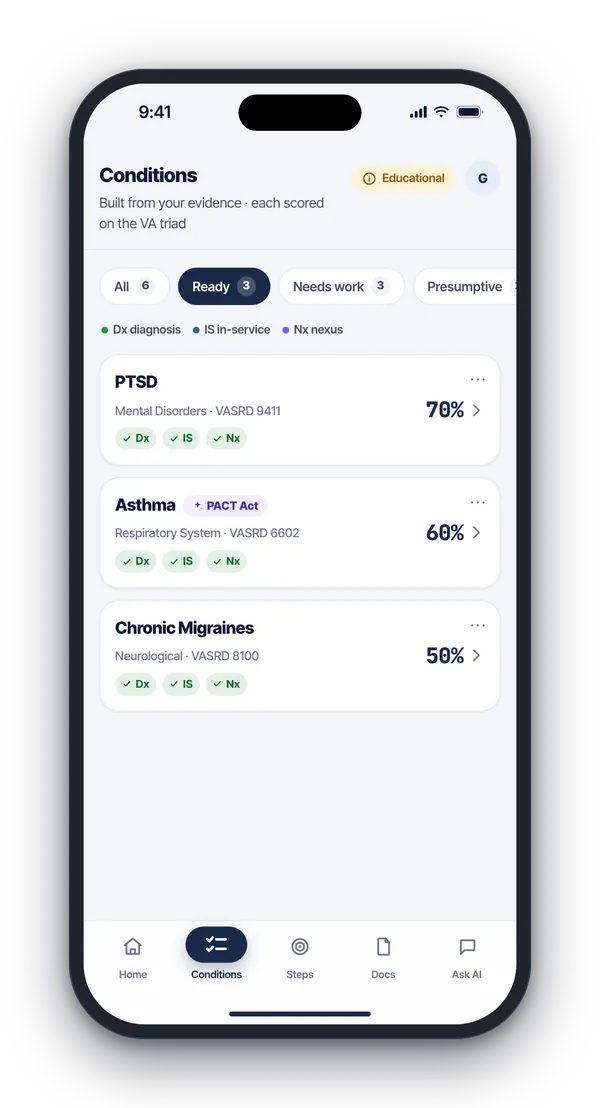
How it grew
- Started, to make sense of one veteran's records
- Rebuilt for the web, iPhone and Android
- Renamed After Duty, on afterduty.app
- Store and site screens rendered from the real app, with a synthetic veteran
Built with
Designed and built by Craftloop, every layer: the web and mobile apps, the cloud services and the AI.
- Next.js
- React
- Capacitor
- Spring Boot on Cloud Run
- Cloud SQL
- Firebase passwordless auth
- Claude on Google Vertex AI
- Gemini
- Stripe
- RevenueCat
About 1,900 automated tests.